COIL-FED LASER CUTTING & LASER BLANKING
Coil-Fed Laser
Cutting Lines.
Lower material cost. Higher output.
A line configured around your parts.
*Potential results vs. a sheet-fed production setup. Depend on your parts, material prices and line configuration. See conditions.
Free analysis with your drawings. A quotation can start without them.
machines manufactured
supplied
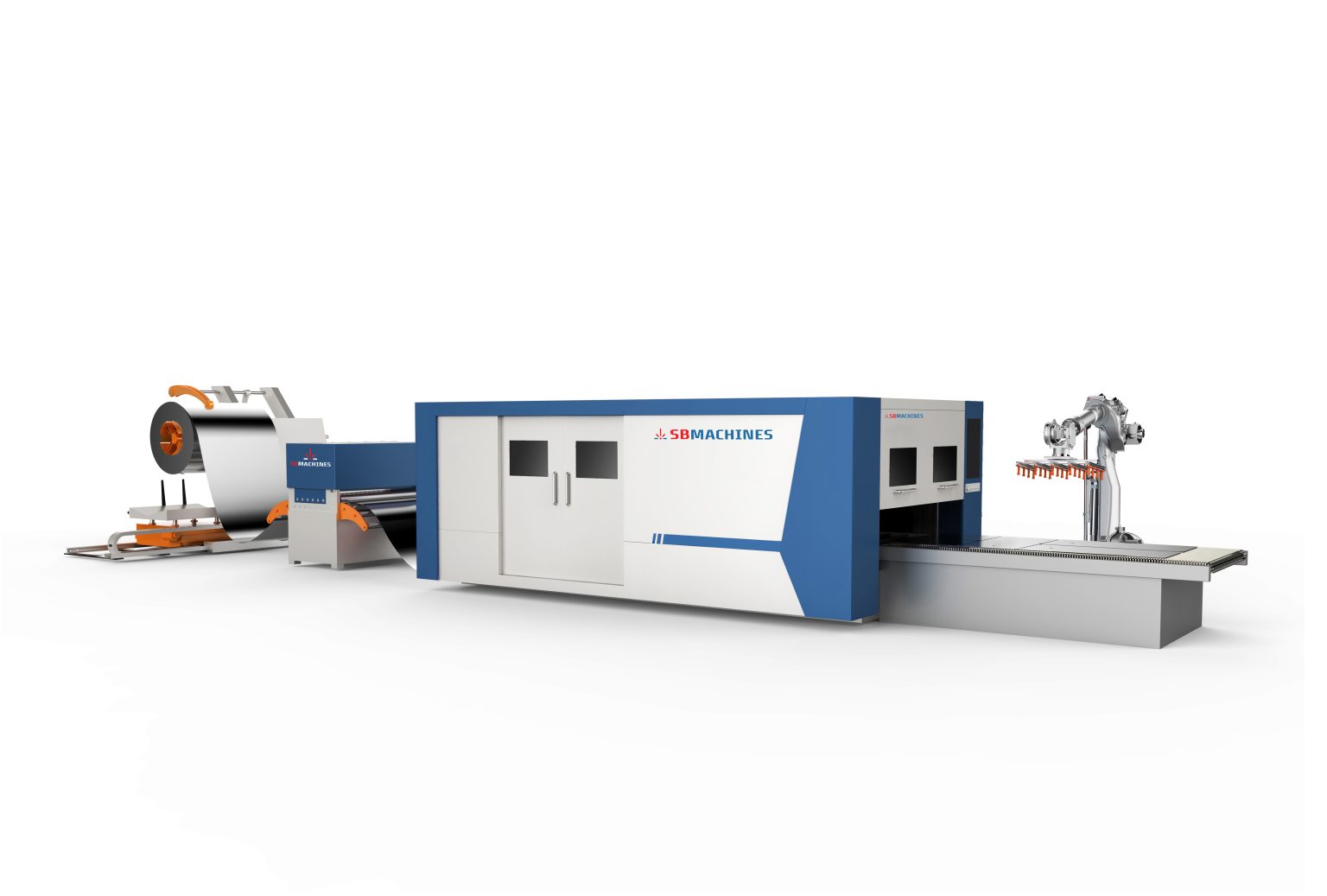
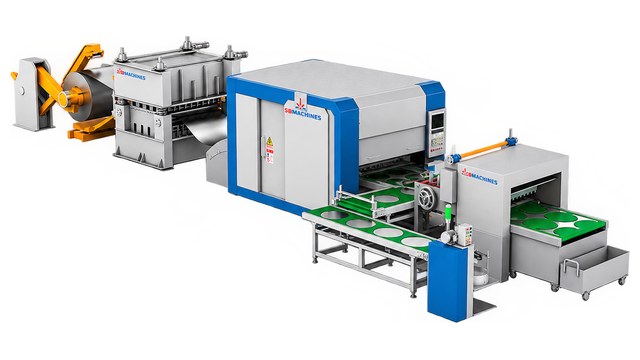
From coil handling and levelling
to cutting, unloading and stacking.
01 / THE BUSINESS CASE
More from your material.
More from your production.
Compare the complete process — not just the purchase price of the machine.
Buy coil. Use more of it.
Combine coil purchasing with nesting along a continuous length, rather than restarting the layout at every sheet boundary.
Reduce repeated sheet-loading cycles.
Coordinated coil feeding, cutting and optional automatic unloading can reduce handling between production stages.
Change the program. Not the die.
For suitable blanking applications, produce new geometries without buying a dedicated blanking die for each design.
Against a press line, the balance depends on volume, tooling and design changes. Against a sheet laser, we compare material use, cutting and handling together.
How efficiently could a coil-fed laser cut your parts?
Send drawings for an assessment of material utilisation, estimated production output and a suitable line configuration.
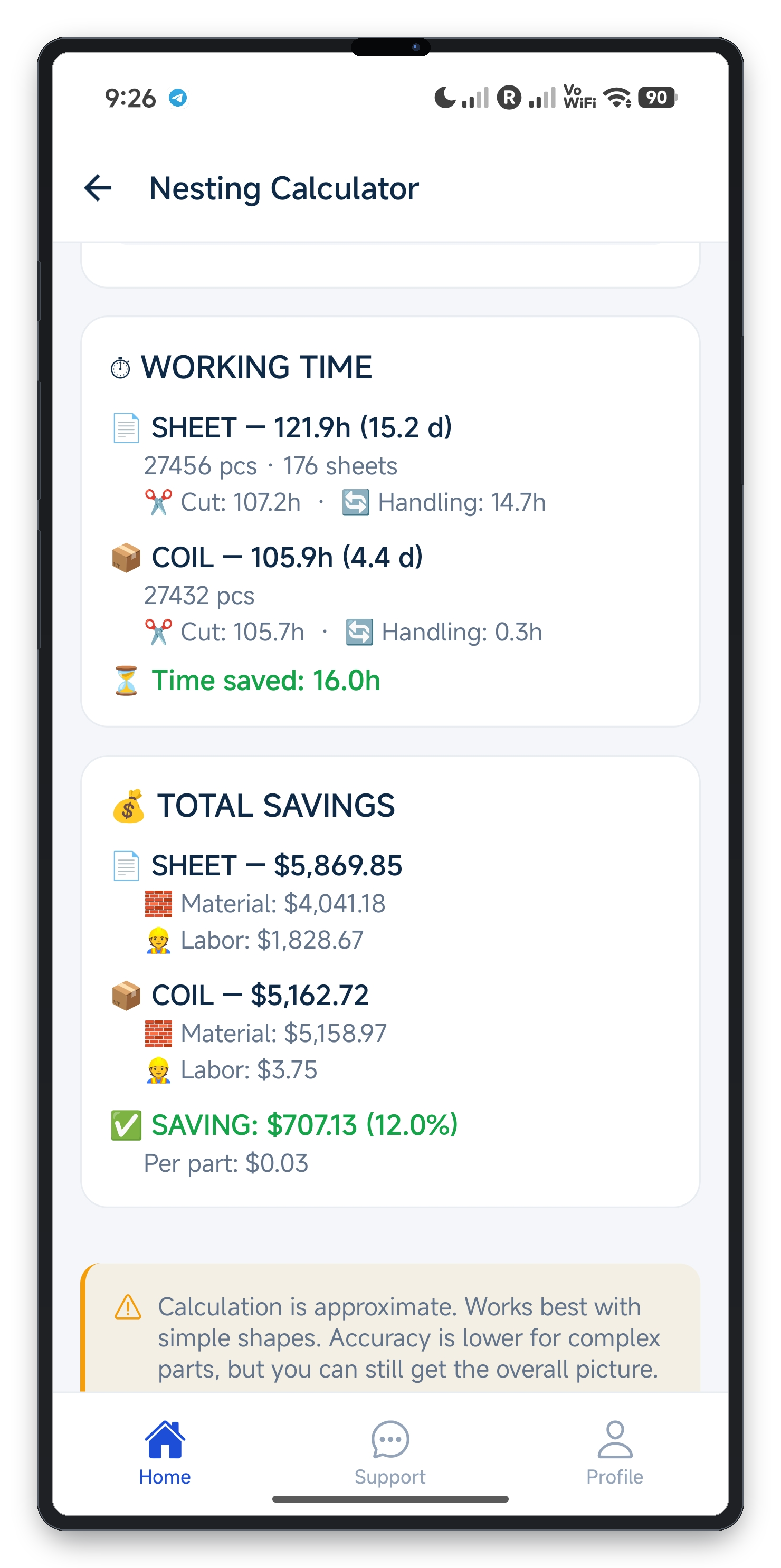
See Your Real Savings: Coil vs. Sheet vs. Press
SBM Laser Help puts a real economic comparison in your pocket. Enter your part and material, and see exactly how coil-fed laser stacks up against sheet-fed cutting or a stamping press.
- Compare cutting time and cycle time between coil, sheet and press
- See exact material and labor cost savings before you switch
- Free for every fiber laser shop — no card required
Upload your DXF drawing → get coil vs. sheet vs. press savings instantly
The 30% material-cost and 5× output figures are potential application results, not guarantees for every project. Material cost depends on purchasing prices, nesting and required margins. Output depends on geometry, cutting parameters, head count and the complete production setup being compared. These are not blanket claims of 30% lower total part cost or five times the cutting speed of one head.
SEE THE MACHINE IN GERMANY
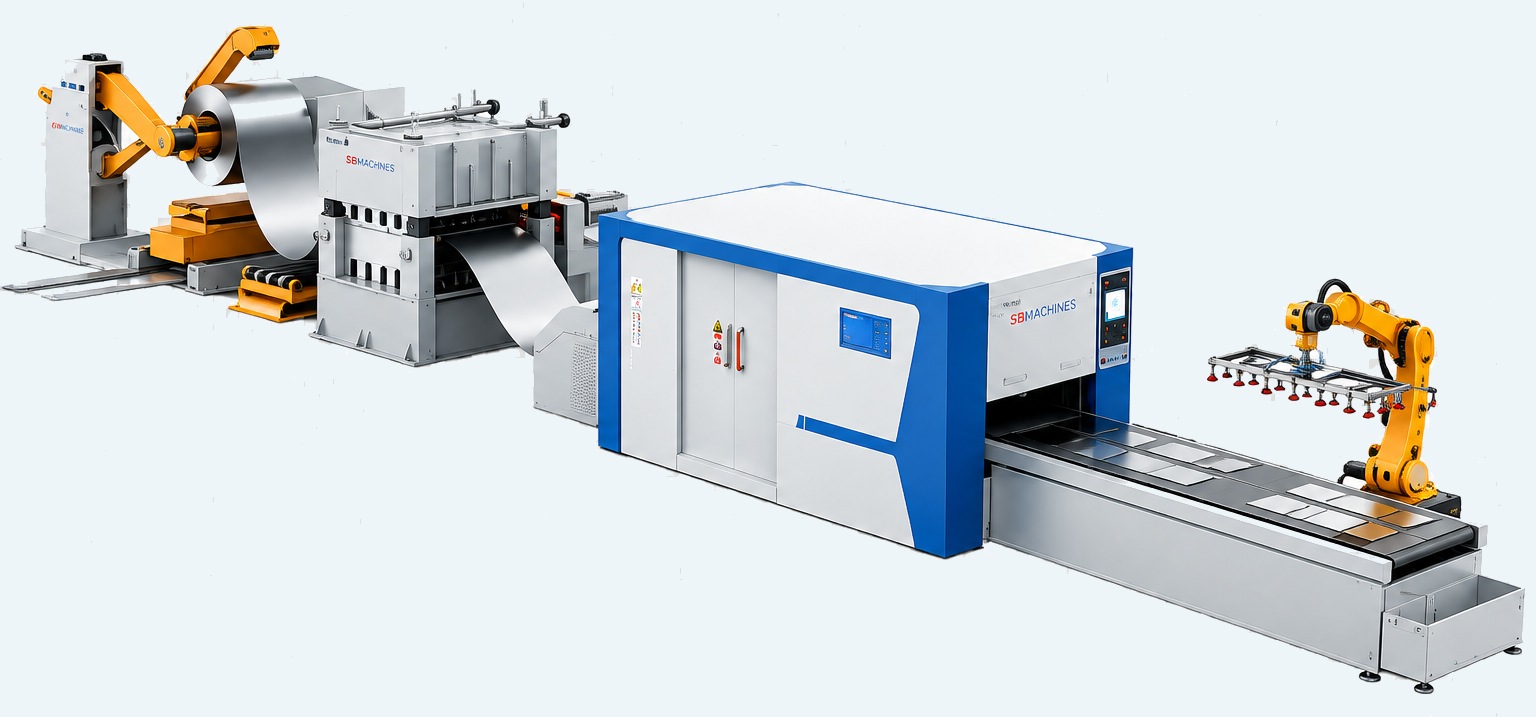
An SU3E coil-fed line is already in Germany.
A complete line — uncoiler, leveller, laser cutting and robotic sorting. We are showing it at EuroBLECH in Hannover, so you can judge the machine in person instead of from a datasheet.
- Single cutting head
- 3 kW fiber laser
- Coil width up to 1,250 mm
- Material 0.6–1.5 mm
- Cutting table 1,250 × 3,000 mm
- 6-axis robotic sorting
EuroBLECH · 28th International Sheet Metal Working Technology Exhibition · Hannover Exhibition Grounds · 20–23 October 2026 · Hall 15, booth C06
02 / CONFIGURED FOR YOUR APPLICATION
Your material.
Your production targets.
Compact or high-output. Manual or automated unloading. The specification follows the application.
Carbon steel · Stainless steel
Galvanised steel · Aluminium
Ranges depend on the model and machine configuration. They are not the specification of a single machine or a promise that every thickness and width combination is available.
MULTI-HEAD PRODUCTIVITY
Up to four cutting heads.
One planned production flow.
Select one, two, three or four heads to suit your part sizes, cutting time and required output. The free parts analysis helps identify the configuration that makes sense.
Metalix CAD/CAM + Beckhoff CNC coordinate the nesting and compatible cutting and handling systems.
Discuss My Configuration
What else is selected for your line?
Coil handling & levellingCoil weight, width, inside/outside diameters, thickness and material strength define the uncoiler and leveler selection.
Cutting & finished partsLaser power, cutting area, surface requirements and tolerances are reviewed for the application. Positioning accuracy alone is not a finished-part tolerance.
Layout & optionsMachine footprint, feeding arrangement, extraction and surface-protection options are defined with the selected configuration.
03 / SU5 · SURFACE-PROTECTIVE CUTTING
No scratches from
metal cutting slats.
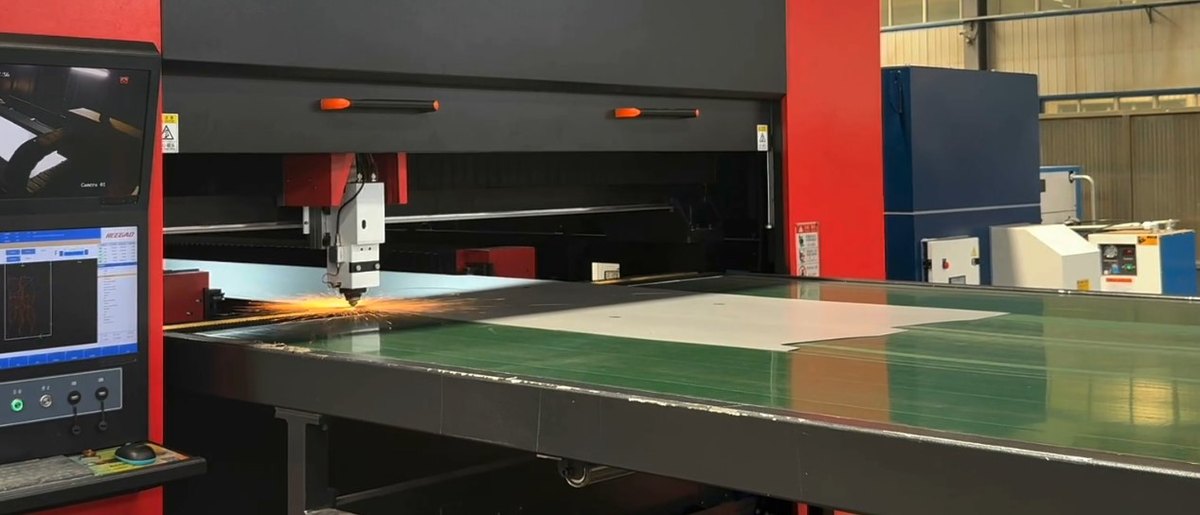
Rubber belts and polyurethane rollers eliminate contact with metal cutting slats. The laser cuts over a free span — not over a belt.
Exclude scratches caused by metal support slats during transport and cutting.
Material utilisation when coil width is matched to suitable part geometry.*
*An application-specific maximum. Actual utilisation depends on part geometry, holes, edge requirements, cutting gaps and coil width. Width-matched blanks can avoid longitudinal edge cutting where the part design allows.
Check My Parts for SU5Process schematic · not to scale.
04 / UNLOADING & STACKING
Choose how your
finished parts leave the line.
The unloading method follows the part geometry, weight, surface requirements and output target.
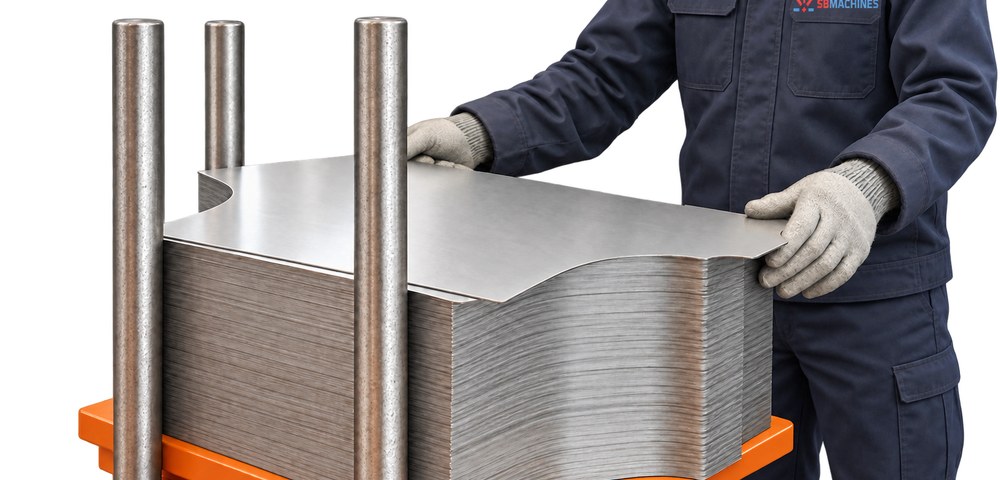
Manual unloading
Collect parts from the output area when automatic handling is not needed.
Operator-managed parts collection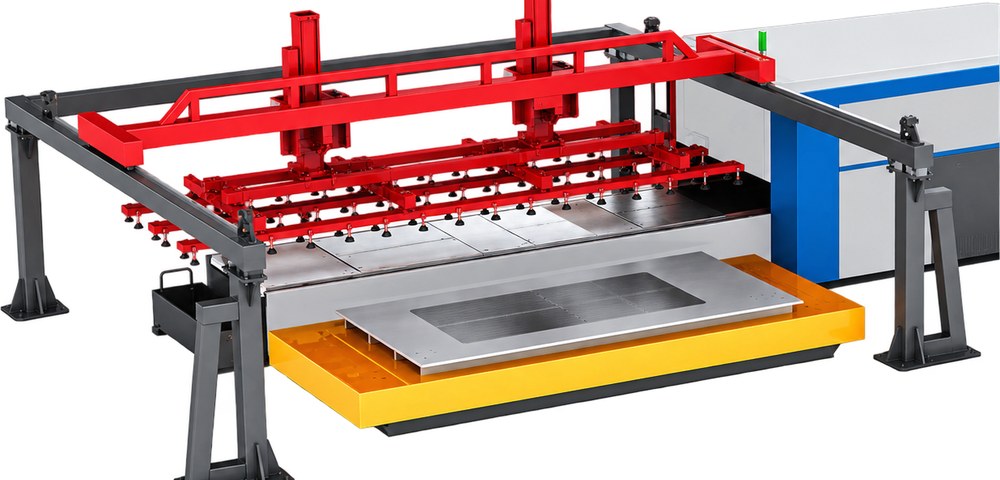
Gantry unloading
The CNC production program controls picking and placing parts into designated stacks.
Automatic unloading + stacking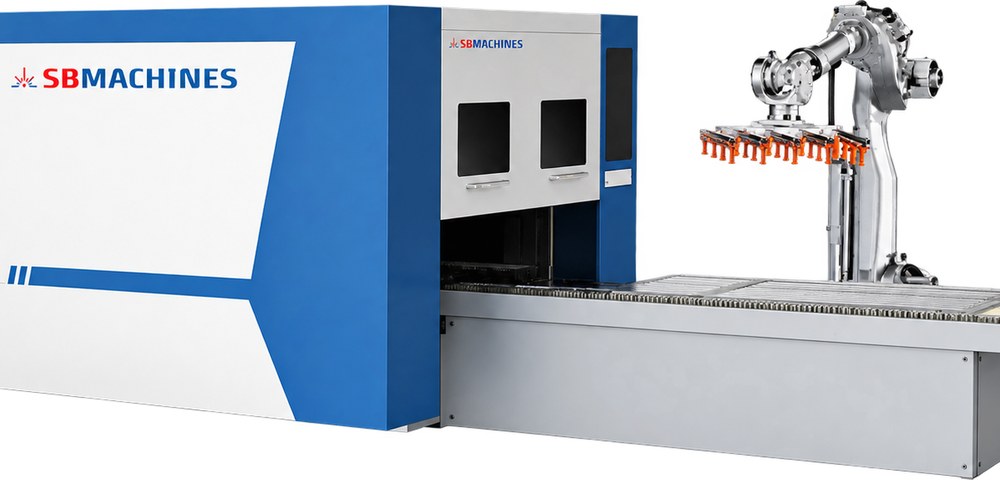
Robotic unloading
CNC-controlled robots collect finished parts and place them in programmed stacking positions.
Automatic unloading + stackingGantry and robotic configurations automate both unloading and stacking according to the production program.
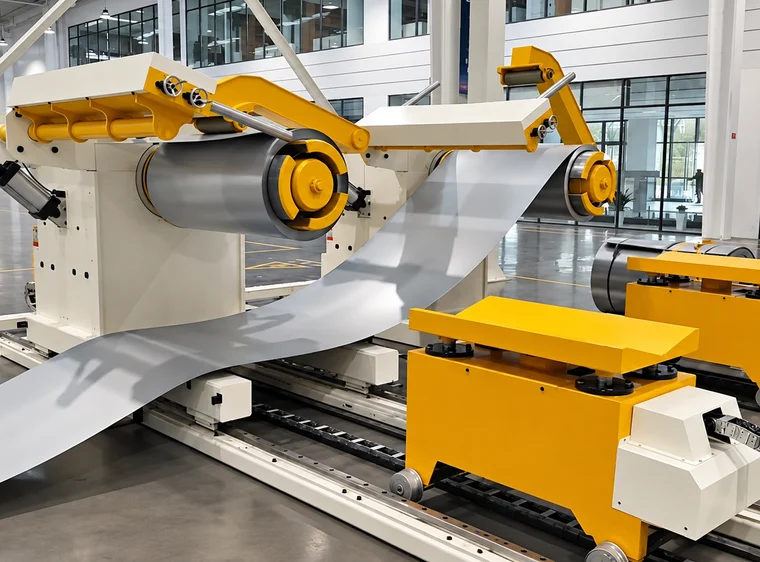
FROM PARTS TO A PRODUCTION LINE
A technical conversation.
Not just a machine price.
Review your parts
and production requirements.
Define the equipment
and unloading configuration.
Agree the installation,
commissioning and support scope.
SBMachines · Sales & service of laser cutting machines · United Arab Emirates. The project proposal defines delivery and service responsibilities.
05 / THE RANGE
Four series.
One coil-fed platform.
Pick the line that matches your coil width, material thickness and output.
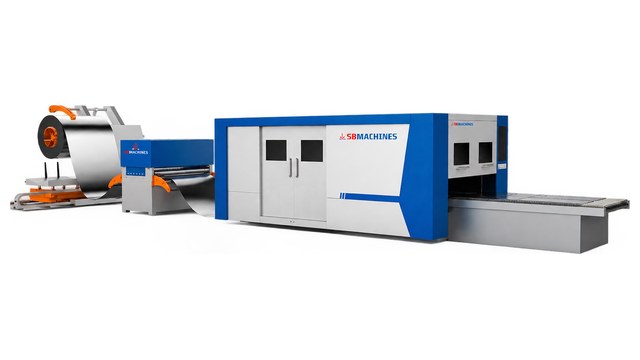
SU3E Series
- COIL WIDTH
- 1,500 mm
- MATERIAL THICKNESS
- 0.6–2.0 mm
- LASER POWER
- 1.5–6 kW
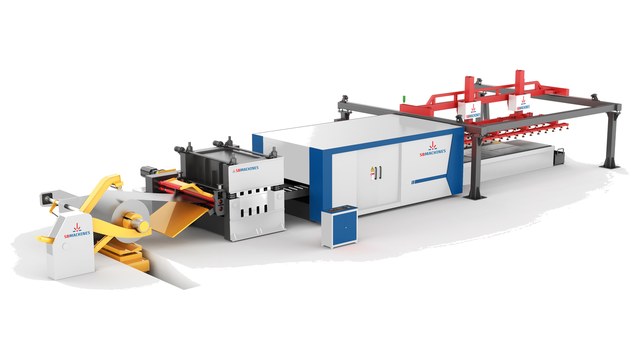
SU3Pro Series
- COIL WIDTH
- 3,000 mm
- MATERIAL THICKNESS
- 0.6–20 mm
- LASER POWER
- 3–60 kW
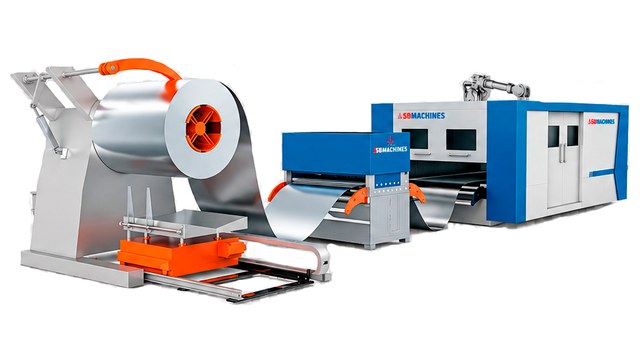
SU4 Series
- COIL WIDTH
- 3,000 mm
- MATERIAL THICKNESS
- 0.6–20 mm
- LASER POWER
- 3–60 kW
SU5 Series
- COIL WIDTH
- 300–1,850 mm
- MATERIAL THICKNESS
- 0.6–3.0 mm
- LASER POWER
- 3–12 kW
BEFORE YOU GET IN TOUCH
Your project.
Your questions.
You do not need a finished technical specification to start.
What does the free parts analysis include?
We assess how efficiently a coil-fed laser could produce your parts: material utilisation, estimated output and a suitable line configuration. Send drawings with the material, thickness and production quantities available. Results are estimates based on the supplied data, not an acceptance guarantee.
Can I request a quote without drawings?
Yes. Start with your material, thickness and a short description of the production task. The quotation form does not require files. Drawings can be provided later for a more detailed assessment.
What determines the price of a line?
Coil capacity and width, material thickness and strength, leveler design, laser power, cutting-head count, cutting area and unloading automation. We quote the configuration suited to the project.
Does every application achieve 30% savings or 5× output?
No. These are potential results for suitable applications compared with a defined sheet-fed production setup. The assessment must consider your actual parts, material prices, volumes, machine configuration and handling process.
Can laser blanking replace a press operation?
It can be suitable when die investment, product variety and design changes are important. A press may remain preferable for some stable, very high-volume parts. We assess the production task rather than assume that laser is always the better choice.
Can the line cut an individual sheet occasionally?
Yes. SU3E, SU3, SU3Pro and SU4 can also process individual sheets when required. Coil-fed production remains their main application.
YOUR NEXT PRODUCTION LINE
Start with a quote.
Or let your parts
do the talking.
We will analyse the efficiency of cutting your parts on a coil-fed laser — free of charge.
- 01Material utilisationReview the nesting and material requirement.
- 02Estimated production outputAssess your part mix and production quantities.
- 03Suitable line configurationMatch cutting and unloading to the application.
Not ready to send files? Use the simple quotation form.
Request a Quote
Tell us about your production task. We will suggest a line configuration and prepare a quotation.